

Analyzing cyber threat intelligence can be hard. You are often overwhelmed with data, drowned in overlapping connections, and unclear about where to start or when to finish your analysis. To help guide their analysts through the maze, intelligence organizations worldwide utilize the threat intelligence lifecycle.
The intelligence lifecycle is a structured approach to collecting, analyzing, and distributing intelligence. It acts as a template that analysts can follow to produce or consume intelligence. The cyber security industry has adapted this lifecycle to suit its needs by creating the Cyber Threat Intelligence (CTI) lifecycle.
This article is your essential guide to the threat intelligence lifecycle. You will learn about its six stages, how this model is applied in the real world, and how to maximize its benefits. Let’s jump in!
What Is the Cyber Threat Intelligence Lifecycle?
The cyber threat intelligence lifecycle is a model that you can use to structure your intelligence analysis from start to finish. Using this model, you can create processes around gathering, analyzing, and distributing threat intelligence to your organization’s key stakeholders.
The lifecycle follows the idealized model of how Western intelligence organizations structure their intelligence work from collection to dissemination. It can be used as a guide for CTI analysts to follow when doing their work or as a template for CTI leads to use when designing processes for their teams.
The threat intelligence lifecycle comprises six stages: Planning, Collection, Processing, Analysis, Dissemination, and Feedback.
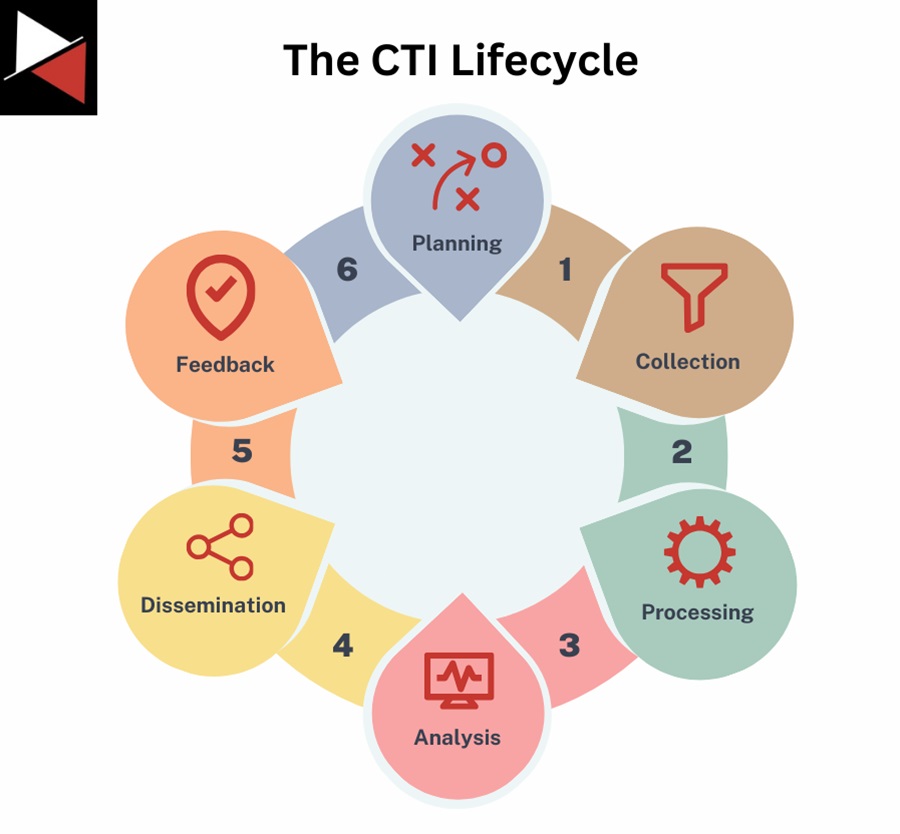
Let’s explore each stage to understand the key processes and objectives associated with it.
Stage 1: Planning
The first stage of the threat intelligence lifecycle is Planning. Here, you will define the goals and objectives of your threat intelligence activity or plan out your entire program’s ambitions.
You will want to achieve the following at this stage:
- Identify the key stakeholders you will share your intelligence with and how you will achieve this.
- Establish the intelligence requirements of your organization at the operational level by focusing on current threats and at a strategic level by evaluating future threats.
- Determine the scope and key objectives of your CTI program. This can vary greatly between organizations. For instance, one organization may want to protect its brand reputation, another wants to defend against ransomware gangs, and a defense contractor may wish to track advanced persistent threats (APTs).
- Prioritize what you want to protect. This includes sensitive information, key business operations, and assets.
- Identify gaps in current intelligence. If strategic objectives change or gaps were found in past CTI activities, you must identify and prioritize addressing these gaps. This could be by collecting more or different data, changing processing or analysis techniques, or adjusting distribution methods.
At the end of this stage, you should have a plan that details how analysts will collect, analyze, and share information that fulfills the organization’s intelligence requirements.
It is very important that the goals and objectives you define at this stage align with your organization’s needs and strategic direction. For example, if your organization plans to adopt AI, your CTI requirements must reflect this. Learn the language, pain puts, and what the teams in your organization need from the intelligence.
Stage 2: Collection
Once a plan has been established, you can proceed to the Collection stage. At this stage, you will gather information that addresses the intelligence requirements you previously defined. This involves identifying relevant data sources to collect information from and storing it in a suitable location.
What is a data source?
A data source is a channel, system, or repository that you can use to gather information about cyber security threats relevant to your organization. They supply data you can collect using manual or automated techniques and prepare for Processing and Analysis.
Where can I store the information I gather?
The information you collect needs to be stored somewhere. This can be a simple storage solution, such as an Excel spreadsheet or a specialized threat intelligence platform. Popular open-source threat intelligence platforms include the Malware Information Sharing Platform (MISP) and OpenCTI. There are also commercial platforms commonly referred to as Threat Intelligence Platforms (TIPs), such as The Record Future Cloud.
Cyber threat intelligence collection can be conducted in various ways. Depending on the data sources at your organization’s disposal, it may involve any of the following:
- Pulling metadata and logs from your organization’s security tools and networks.
- Gathering threat data from commercial or open-source threat intelligence feeds that your company subscribes to.
- Talking to knowledgeable sources directly, such as journalists, insiders, or peers.
- Trawling through open-source news, blogs, and other OSINT sources.
- Scraping data from social media, websites, or forums.
- Stepping into the murky world of dark web forums and other cybercrime channels to extract data.
You will never be able to collect all the data. Where your organization operates will dictate your operational environment based on cultural, technical, and geopolitical factors. Your operational environment will determine the data sources to which you have access and the threats you encounter. For instance, the security firm collecting from customers in the US will see different data and threats than the security firms in Iran.
You will be able to collect a subset of the data available in your operation environment, use a subset of that data to create information (from Processing), and a subset of that information for intelligence (from Analysis). The quantity of data, information, and intelligence decreases as you progress through the lifecycle.
Stage 3: Processing
With raw data collected, you need to process it to transform it into information for analysis. Welcome to the Processing stage.
During the Processing stage, you will organize and structure the collected data to prepare it for analysis. This often involves:
- Cleaning the data to remove any errors and inconsistencies.
- Normalizing the data so it can be uploaded to your data storage solution.
- Verifying the data is legitimate and trustworthy based on the source you collected it from and what others are saying about it. For instance, is an IP address recognized as malicious by multiple intelligence vendors or no one outside the blog post you found it on?
Processing the data you collect is vital in ensuring efficient analysis. If you analyze garbage data, you will get garbage intelligence, and the insights you extract from this intelligence will be… garbage.
Processing is usually done by machine nowadays. Your SIEM or EDR solution will turn the data (logs) into a human-readable format, making it easier to understand. Nevertheless, it is always useful if you, as an analyst, have the capability to manually process, read, and interpret the data in case a fancy tool is unavailable.
Stage 4: Analysis
The Analysis stage turns the information you have gathered into actionable intelligence that your organization can use to defend itself or inform its strategic decisions. It involves a human operator using their knowledge and experience to identify patterns or trends within the collected information. Once identified, these patterns are interpreted to produce insights that the organization can use to inform decisions.
- Does it mean your organization needs to block certain indicators (e.g., IP addresses, domains, file hashes)?
- Does it mean your organization needs to focus its efforts on hardening a particular security gap?
- Does it mean your organization needs to invest in a new technology, move away from an old one, or spend more time training its employees?
Understanding the nature, scope, and implications of the threats present in the data collected is the ultimate goal of this stage. The CTI analyst is the key interpreter in formulating actionable intelligence.
There are various structured analysis techniques and tools available at this stage to assist you (e.g., the diamond model, the cyber kill chain, etc.). You must also be aware of biases that could creep in and cloud your judgment when performing CTI analysis. We will discuss structured analytical techniques and biases in later articles.
Stage 5: Dissemination
Once you have turned the collected data into actionable intelligence, it is time to share it with the relevant stakeholders.
This is one of the key stages in the threat intelligence lifecycle that you want to get right. You may have the best intelligence in the world, which could save your company from an imminent attack or steer your cyber security program back on course. However, it is useless if you fail to communicate this information to the right stakeholders in a timely manner.
Like Kentucky Fried Chicken (KFC), good threat intelligence is relevant, timely, and actionable!
The Planning and Preparation stage usually dictates the success of the Dissemination stage. The following questions should have been answered before you reach the Dissemination stage:
- How do you plan on distributing the intelligence you consumed or produced to others?
- Who are the relevant stakeholders, and what type of intelligence will you give them?
- What intelligence-sharing channels can you use?
If you answered these questions, you should know what intelligence you want to share, with whom, and how to share it efficiently.
You might share it via email, in an instant message on Microsoft Teams or Slack, or in a weekly presentation on a video call. The dissemination method just needs to ensure the intelligence you share is received in a timely manner and is actionable for the recipient. For instance, a list of IOCs or TTPs to hunt for is relevant to your security operations team but not to the CISO.
Try to make the dissemination stage as automated as possible. Automatically upload IOCs for detection to your SIEM or EDR platform, use pre-defined templates when writing emails, reports, or presentations, and create information-sharing groups so you don’t need to contact every stakeholder individually.
Stage 6: Feedback
An often neglected stage of the threat intelligence lifecycle is the Feedback stage. Every CTI analyst is eager to collect, analyze, and share intelligence. They are less eager to receive feedback on the effectiveness of their efforts or on whether the intelligence they are consuming/producing is of any value.
The Feedback stage is crucial if you want to see your CTI work continuously improve and add value to your organization. You need to know if your CTI efforts are making a difference to your organization at the operational or strategic level, and if not, how to adjust them to ensure they do.
Too often, CTI teams will blindly share intelligence with people in their organization and never stop to consider if what they are sharing adds value. You need a two-way communication channel between the CTI team and key stakeholders. Stakeholders need to provide feedback on the effectiveness of the intelligence being shared with them, how they utilize it, and whether any improvements can be made to aid them in making informed decisions.

Examples of questions to ask when requesting feedback include:
- Is the intelligence being shared actionable, relevant, and timely?
- Can the CTI process be more efficient? (i.e., adding automation or investing in new tools and data sources)
- Is the amount of intelligence being shared too much or too little?
- Have the organization’s intelligence requirements changed?
- Can the intelligence be shared with the wider community?
Using the Threat Intelligence Lifecycle
The threat intelligence lifecycle is utilized by numerous organizations worldwide. It does not matter the size of your organization or the resources at your disposal; the threat intelligence lifecycle is a model that all CTI teams can use to structure their processes.
The specifics of how you use the threat intelligence lifecycle will depend on two main things:
- The intelligence requirements of your organization
- The resources you have at your disposal
Your Intelligence Requirements and the Threat Intelligence Lifecycle
Broadly speaking, your intelligence requirements will fall under one of the three main types of threat intelligence: operational, tactical, or strategic.

Each time you run through the threat intelligence lifecycle, you will focus on one of these three main types of threat intelligence, and which one you focus on will dictate how you use the model. Let’s look at examples of each:
- Operational CTI: If your intelligence requirements involve combating an ongoing phishing campaign, you will want to focus your efforts on collecting operational intelligence. Your security operations team can use this intelligence to block IOCs with your SIEM or EDR solution, detect malware signatures with YARA rules, or identify attack patterns with Sigma rules.
- Tactical CTI: If your intelligence requirements involve identifying technical security controls that can detect ISO files being used as an initial access vector, you need to gather tactical intelligence. Your security operations team utilizes this intelligence for detection engineering, where they employ the tactics, techniques, or procedures (TTPs) you identify to create detection rules for your SIEM or EDR solution.
- Strategic CTI: If your intelligence requirements focus on identifying ransomware trends, you will want to collect strategic intelligence that provides an overview of what is being seen across the threat landscape in relation to ransomware. You may want to ask questions such as: What ransomware is emerging, what vulnerabilities it is exploiting, and how I can best defend against new ransomware trends. These questions will help inform your organization’s broader security strategies.
To provide more context, here is how you would use the threat intelligence lifecycle based on the intelligence you choose to focus on at each stage.
The Threat Intelligence Lifecycle: Operational Intelligence
- Planning: Define what information you need to collect to address an immediate and ongoing cyber attack, such as a phishing campaign. This may include IOCs, malware signatures, attack patterns, or vulnerability details.
- Collection: Collect the data you outlined in the Planning stage. You could use open-source intelligence by searching for information about a recent campaign, collecting data from a cyber attack against your own network, or using a commercial threat intel feed your organization pays for.
- Processing: Upload the collected data to your threat intelligence database, ensuring it is organized and structured. This may include adding IOCs to an Excel spreadsheet or automatically ingesting data into a threat intelligence platform. Make sure you verify the data you upload.
- Analysis: Analyse the data you collected. Enrich it with other data to find other IOCs to detect, block, or hunt for. Aim to provide more context to the security operations team.
- Dissemination: Share your intelligence with the security operations team. This will be technical data that should be used immediately. As such, you can automatically upload these IOCs to your security solutions from your threat intelligence database or quickly distribute them to the operations team via instant message or email.
- Feedback: Gather information from the security operations teams to determine if the IOCs you shared were detected, if they were identified in any threat hunting activity, or if the CTI process was efficient enough. A key requirement of operational intelligence is efficiency, as it addresses both immediate and ongoing threats.
The Threat Intelligence Lifecycle: Tactical Intelligence
- Planning: Define what information you must collect to address the tactics, techniques, and procedures adversaries use or exploit paths commonly abused. This intelligence targets detections higher up the Pyramid of Pain.
- Collection: Collect the data you outlined in the Planning stage. This data will likely be in threat intelligence reports describing the technical details of how an attack was performed. Ideally, the reports will map attack techniques to the MITRE ATT&CK framework so you track TTPs between reports. Threat intelligence reports can be open-source or supplied by a commercial vendor.
- Processing: Upload the collected data to your threat intelligence database. This helps you keep track of the TTPs, exploit paths being abused, and the mitigations you can implement to protect yourself against them.
- Analysis: Analysis plays more of a role when dealing with tactical intelligence than operational intelligence. You need to assess the information you gathered to identify patterns, prioritize which TTPs or exploit paths to defend against, and enrich the data you collected with supplementary intelligence. Enrichment may include attributing the TTPs to a specific threat actor or campaign, providing mitigation advice, or offering additional context.
- Dissemination: Tactical intelligence typically goes to more experienced security operations team members with the technical capability to perform detection engineering and advanced threat hunting. These individuals can transform the intelligence you provide into detections, mitigations, or threat hunts that are more effective at dealing with threats. This intelligence will be shared in a detailed technical report.
- Feedback: Gathering feedback on tactical intelligence is usually a cyclical process. You will provide the security operations team with intelligence about a TTP, and they will ask you to find more information so they can make their detections/mitigations more robust. This cycle continues as new TTPs emerge that circumvent existing detection or mitigation methods.
The Threat Intelligence Lifecycle: Strategic Intelligence
- Planning: Define the information you need to collect regarding the broader cyber threat landscape. This is usually the evolving trends in attacks, technologies, threat actors, malware, and ransomware.
- Collection: Collect the data you outlined in the Planning stage. You will find trends in monthly, quarterly, or yearly reports from threat intelligence vendors or major technology firms like Mandiant, Cisco Talos, Red Canary, Record Future, Kaspersky, Microsoft, and many more. Commercial TIPs also provide intelligence trend reports.
- Processing: You will likely upload the information you collect outside of a threat intelligence platform, typically in a spreadsheet, as it is only reviewed monthly, quarterly, or yearly, and is not designed for sharing. Ensure that you follow a structured format so that it is easy to compare this new information with past data.
- Analysis: Review the reports you collected and compare the data to the current strategic threats, trends, and organizational security objectives you are tracking. It is important to track if your organization’s strategic objectives align with the current trends or if a course correction needs to be made.
- Dissemination: Strategic intelligence is distributed to key stakeholders who influence the strategic direction of the organization’s security or technological investments. This could be managers or executives, depending on the size of your organization. You will share strategic intelligence on a monthly, quarterly, or yearly basis, depending on how frequently your organization’s strategic positioning is reviewed. As such, this intelligence is usually presented in a video call (briefing), where questions can be asked and supplied in a formal report that key decision-makers can review.
- Feedback: Providing clear feedback is crucial after sharing strategic intelligence. It is vital that your strategic intelligence requirements are informed by the needs of key stakeholders within the organization. Based on your intelligence, stakeholders may realign their strategic objectives, expand strategic intelligence requirements, or change them entirely. As such, feedback is crucial to inform the Planning stage of the next threat intelligence lifecycle round.
Your Resources and the Threat Intelligence Lifecycle
The second factor that plays a role in how you use the threat intelligence lifecycle is the resources at your disposal. This is the time, manpower, and money you can expend collecting, analyzing, and sharing intelligence. Let’s look at each.
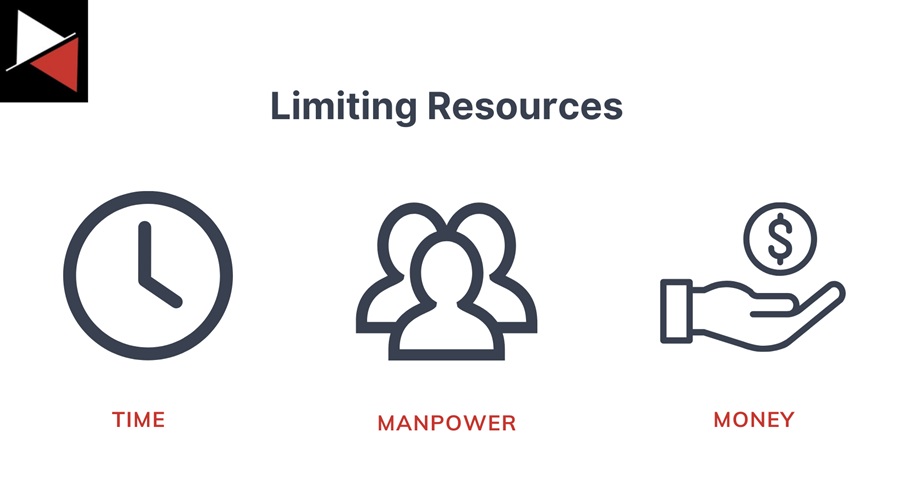
Time
Time is perhaps the most significant factor in how you utilize the threat intelligence lifecycle. It is a limiting factor for us all, and finding ways to maximize our time is crucial for creating an efficient threat intelligence lifecycle. Ideally, you want to spend as much time as possible at each lifecycle stage, yet this is not a reality. Instead, you need to prioritize certain stages and automate where you can to save time.
I recommend prioritizing the following stages:
- Planning: This is the most crucial stage of the lifecycle, as it has the greatest impact on the success of your CTI work. Good planning will ensure you know where to find information, understand how to turn that information into actionable intelligence, and can choose the right distribution channel to share that intelligence efficiently.
- Analysis: Analysis transforms the information you gather into actionable intelligence that others can utilize, whether it’s IOCs you can share, TTPs you can mitigate, or insights that inform key decisions.
- Dissemination: Intelligence is not useful if it is not shared with the right people in a timely manner. Ensure you target your intelligence at the right people and in a manner they can easily digest.
You can then try to automate the remaining stages to save you time:
- Collection: Build a CTI aggregator to automate open-source intelligence collection or invest in a TIP to fine-tune intelligence specific to your organization.
- Processing: Utilize a specialized threat intelligence platform, such as MISP or OpenCTI, to automatically structure and share your data. You can even automatically ingest data into these platforms by setting up a threat intel feed.
- Feedback: Create a Google Form with questions that other security teams or personnel can fill out to provide quick, structured feedback that you can act on.
Manpower
The manpower you can dedicate to CTI processes will affect how you use the threat intelligence lifecycle. There are only so many automations or time-saving tools you can invest in to claw back time for your team and maximize your limited manpower. To account for limited manpower, you must prioritize the intelligence you invest in your team’s time. Ensure you thoroughly discuss with key stakeholders what intelligence requirements they want to prioritize, set expectations, and plan accordingly.
Manpower is often a limitation on the amount of intelligence you can process. If you face manpower limitations, you will follow the threat intelligence lifecycle, limiting either the number of cycles you go through or the amount of intelligence you collect. Clear intelligence requirements will make it easier to collect only relevant information.
Money
Money is a factor for all security teams. The more you have, the easier things are. However, today there are numerous free resources available for collecting information, open-source solutions for storing that information, and free-to-use tools that can be found online for analyzing and transforming it into intelligence.
Don’t be swayed by the latest and greatest intelligence tool. Threat intelligence tools are just wrappers that vendors will put on data. You are paying for the data in threat intelligence, so if one vendor can provide access to that data for cheaper, you are better off going for them and spending time building your own tools that integrate into your CTI team’s workflow.
Conclusion
The cyber threat intelligence lifecycle is a model that CTI analysts and teams follow when collecting, analyzing, and sharing threat intelligence. The use of the threat intelligence lifecycle depends on two main factors: your organization’s intelligence requirements and the resources available to you.
Intelligence requirements can be grouped into three main categories: operational, tactical, and strategic. The intelligence you choose to ingest into the lifecycle will dictate the specifics of each stage. For instance, operational intelligence will involve sharing IOCs that your security operations team can use, whereas strategic intelligence will require analyzing trends in data to inform key decisions.
This article has shown you how to use the threat intelligence lifecycle, some key considerations you must make, and a few useful tips that will aid you in your CTI work. Remember to plan your CTI process thoroughly, collect intelligence relevant to your organization, and present the intelligence you consume or produce to the right people in an appropriate format.




Frequently Asked Questions
Which Stage of the Cyber Threat Intelligence Lifecycle is Most Important?
The Planning stage is the most critical stage of the threat intelligence lifecycle, as it has the greatest influence on the success of your CTI work. In this stage, you will define the goals and objectives of your threat intelligence activity. You must identify the key stakeholders you will share your intelligence with, clearly detail intelligence requirements, and outline how you will collect, analyze, and share the intelligence that fulfills these requirements.
Who Invented the Cyber Threat Intelligence Lifecycle?
A single individual did not create the threat intelligence lifecycle. It has evolved over time as a methodology for managing the collection, analysis, and dissemination of threat intelligence in the field of cyber security. The model is intended to be used and refined by CTI analysts to suit their individual use cases and the organization’s needs. As you saw in this article, how you use the threat intelligence will depend on the type of intelligence you ingest and the resources at your disposal.
Why Should I Use the Cyber Threat Intelligence Lifecycle?
The threat intelligence lifecycle is a fundamental model used in the cyber security industry to manage the collection, analysis, and sharing of cyber threat intelligence (CTI). It provides a structured methodology for handling CTI operations systematically, from start to finish. Following a methodology ensures you are thorough in your processes and encourages continuous improvement and refinement.
What is Threat Intelligence?
Threat Intelligence (TI), often referred to as Cyber Threat Intelligence (CTI), is the analysis and contextualization of information about potential or current threats to an organization. It’s not just raw data—like a list of malicious IP addresses—but rather data that has been processed, evaluated, and enriched to provide context, identify patterns, and offer actionable insights.